Dr. John’s Wishful is a blog where stories, struggles, and hopes for a better nation come alive. It blends personal reflections with social commentary, turning everyday experiences into insights on democracy, unity, and integrity. More than critique, it is a voice of hope—reminding readers that words can inspire change, truth can challenge power, and dreams can guide Filipinos toward a future of justice and nationhood.

Showing posts with label Teachers. Show all posts

Friday, February 20, 2026

Licensed on Paper, Unprepared in Reality: The Quiet Failure Behind Our Licensure Success Stories

 *Dr. Rodolfo John Ortiz Teope, PhD, EdD, DM 


I once sat across a professional who, on paper, was licensed, certified, and legally qualified. Yet within minutes of the examination, something felt deeply wrong. The answers were hesitant. The fundamentals were missing. The confidence that should come from real mastery simply was not there. As an educator and examiner, you develop an instinct for this. You do not humiliate. You probe gently. You return to the basics. And there, quietly and painfully, the truth revealed itself. This was not anxiety. This was unfamiliarity. Later, through confirmation that came in careful and restrained conversations, I learned what I had already sensed. This individual had technically passed the licensure examination, but in reality had failed it. What carried them through was not competence, but a fraudulent leakage. That moment stayed with me, because I realized I was not just examining a professional. I was confronting the consequences of a system that had betrayed its own purpose.


That memory resurfaced when Senator Sherwin Gatchalian raised the alarm over alleged licensure examination leaks. For me, this is not a headline meant to trend and fade. It is personal. I write this as an educator, a public safety and law-enforcement professor, and a former public official who has spent years training people entrusted with lives, safety, and public trust. When licensure examinations are compromised, the damage does not remain inside testing rooms. It walks into clinics, classrooms, construction sites, and public offices, carrying a license it never truly earned.


I cannot forget the Nursing Board Examination leakage scandal of the early 2000s. At that time, I was already teaching and mentoring students whose dreams were larger than themselves. Many came from families that had exhausted their savings, sold property, and endured separation just so a child could take a chance at a better life. When the scandal broke, the damage was immediate and cruel. Honest passers were suddenly questioned. Filipino nurses, known globally for competence and compassion, carried suspicion they did not deserve. The system failed them, and the wound lingered long after the news cycle moved on.


There is, however, a deeper and more uncomfortable layer to that episode that must be recalled with care and sobriety. Subsequent investigations during the nursing board controversy established that the leakage did not originate from examinees or random third parties, but from individuals who were themselves part of the examination process, acting in improper coordination with certain review centers. The motivation was not ideological but commercial. In a highly competitive review-center industry, passing rates became marketing currency. Prestige translated into enrollment, and enrollment translated into profit. This environment created incentives where ethical boundaries could be blurred. This does not mean that all examiners or review centers were complicit, nor should suspicion be generalized. But it does reveal a structural vulnerability. When those who craft examinations operate within an ecosystem where licensure outcomes are commodified, the system becomes exposed to abuse if safeguards, oversight, and institutional firewalls are weak.


With this reality in mind, it may also be time for the government to confront another sensitive but unavoidable issue: the regulation of review centers themselves. In practice, the future of many aspiring professionals is shaped not only by their schools but by the review centers that prepare them for licensure examinations. These centers have grown into a parallel education industry, expanding rapidly, opening multiple branches nationwide, and even operating through franchising. Like mushrooms, they multiply with remarkable speed, yet with minimal oversight relative to their influence. While many review centers act ethically and responsibly, the absence of clear and uniform standards creates vulnerabilities. Teaching methods, instructor qualifications, content integrity, and ethical boundaries are often left unchecked. When passing rates become marketing tools rather than reflections of genuine preparation, credibility is put at risk. If the integrity of licensure is to be protected, review centers can no longer remain invisible actors in the regulatory landscape. Sensible monitoring, accreditation standards, and accountability mechanisms are no longer optional, because the credibility of future professionals increasingly depends on how these centers prepare, guide, and discipline their examinees.


There is also a national dimension that we rarely confront honestly. We often celebrate the fact that thousands of Filipinos pass licensure examinations and are therefore qualified to work abroad under regional and international integration frameworks. We take pride in producing professionals who can compete globally, and the government is understandably pleased when these professionals become overseas Filipino workers who contribute valuable dollar inflows to the economy. But we must ask a more uncomfortable question. When they go abroad, are they truly competent and ready? Every Filipino professional who works overseas represents not just themselves, but the country, the flag, and the credibility of our education system. There are painful realities we prefer not to discuss, including stories of licensed professionals who end up underemployed abroad, using their professional credentials merely as entry points but not actually practicing the profession they trained for. This is not always a failure of opportunity. Sometimes it is a failure of preparation. When numbers matter more than readiness, we export credentials instead of competence, and that is a disservice both to our people and to the nation they represent.


As painful as these scandals are, I have come to accept a harder truth that many are afraid to say aloud. The real problem is not the licensure examination. The exam is only where failure finally becomes visible. The deeper problem lies years earlier, inside the colleges and universities that produce graduates who are supposed to be ready to be licensed, but are not.


I have mentored students who graduated with honors on paper but were fragile in practice. I have watched young people break down after failing board exams, not because they were lazy, but because they were never truly prepared. In those moments, it becomes painfully clear. The licensure examination did not fail them. The system that trained them did.


If we are serious about reform, we must stop treating licensure examinations as the villain. The exam is doing exactly what it was designed to do. It filters. It exposes. It draws a hard line between readiness and unpreparedness. What makes people uncomfortable is not the exam itself, but the truth it reveals.


The uncomfortable truth is this. Many schools offering programs that require licensure examinations are not properly monitored, not properly equipped, and not properly accountable. Laboratories are incomplete. Faculty lack depth or real-world exposure. Curricula are outdated. Clinical, field, and practicum experiences are treated as requirements to be checked off rather than competencies to be mastered. Yet graduates are marched to the stage, handed diplomas, and told they are ready.


They are not.


Education has slowly been reduced into a commodity. Enroll, pay, attend, graduate. As if a degree were a product and not a responsibility. As if enrollment alone guarantees competence. Schools, particularly those chasing numbers and revenue, have become manufacturing plants of graduates who are not prepared to be licensed and not prepared to practice, but are released anyway into a system that will later expose them.


This is where regulation must be honest and firm. Schools that offer programs requiring licensure examinations must be strictly monitored by the Commission on Higher Education. Facilities must matter. Faculty qualifications must matter. Training depth must matter. Passing rates must matter. Schools should never allow students to graduate, much less walk on stage, if they are clearly not equipped with the knowledge and competence demanded by their profession.


If education were done right, the licensure examination would feel almost ceremonial. Not because it is easy, but because the graduate has already been forged by years of rigorous study, discipline, and real-world exposure. The exam would simply confirm what the school already ensured. That the graduate is competent. That the graduate is safe. That the graduate is worthy.


But that is not the reality we see.


Instead, we see shock, repeated failures, desperation, and when leaks occur, temptation. Not because people are inherently immoral, but because the system cornered them into inadequacy long before they reached the testing room. Even if every licensure exam were perfectly secured, the failures would still surface. The unprepared would still fail. The problem would simply appear quieter, not solved.


This is why focusing only on exam leakage, while necessary, is incomplete. True reform must begin where education begins. In classrooms. In laboratories. In clinical and field training. In the courage of regulators to suspend or close programs that cannot meet standards, no matter how politically inconvenient. In the courage of schools to delay graduation when students are not yet ready, even if it hurts enrollment figures.

__

 *About the author:

Dr. Rodolfo “John” Ortiz Teope is a distinguished Filipino academicpublic intellectual, and advocate for civic education and public safety, whose work spans local academies and international security circles. With a career rooted in teaching, research, policy, and public engagement, he bridges theory and practice by making meaningful contributions to academic discourse, civic education, and public policy. Dr. Teope is widely respected for his critical scholarship in education, managementeconomicsdoctrine development, and public safety; his grassroots involvement in government and non-government organizations; his influential media presence promoting democratic values and civic consciousness; and his ethical leadership grounded in Filipino nationalism and public service. As a true public intellectual, he exemplifies how research, advocacy, governance, and education can work together in pursuit of the nation’s moral and civic mission.


I say this as an educator, a public safety and law-enforcement professor, and a former public official. We are not doing our youth any favor by letting them graduate unprepared and then blaming the licensure examination for their failure. That is not compassion. That is negligence.


The licensure examination is not the disease. It is only the diagnosis.


And what we are uncomfortable seeing in that diagnosis is not the cruelty of the exam, but the education system’s quiet surrender to mediocrity.

__

 *About the author:

Dr. Rodolfo “John” Ortiz Teope is a distinguished Filipino academicpublic intellectual, and advocate for civic education and public safety, whose work spans local academies and international security circles. With a career rooted in teaching, research, policy, and public engagement, he bridges theory and practice by making meaningful contributions to academic discourse, civic education, and public policy. Dr. Teope is widely respected for his critical scholarship in education, managementeconomicsdoctrine development, and public safety; his grassroots involvement in government and non-government organizations; his influential media presence promoting democratic values and civic consciousness; and his ethical leadership grounded in Filipino nationalism and public service. As a true public intellectual, he exemplifies how research, advocacy, governance, and education can work together in pursuit of the nation’s moral and civic mission.


Thursday, December 7, 2017

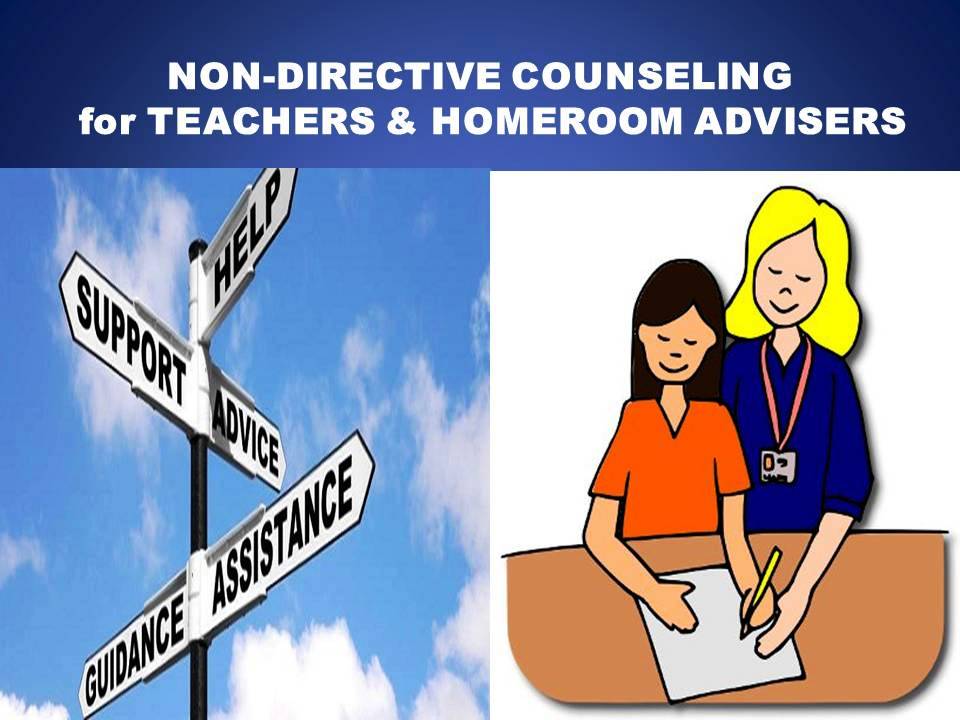
NON-DIRECTIVE COUNSELING

*Dr. Rodolfo John Ortiz Teope


Introduction

While non-directive counseling is often associated with clinical settings and used primarily by trained psychologists, psychiatrists, and certified counselors, its foundational principles and techniques are highly applicable in educational environments. Teachers and school personnel frequently face students exhibiting undesirable behavior that may stem from emotional distress, social conflict, or developmental challenges. In these situations, non-directive counseling, when used appropriately, becomes a powerful approach to help students process their emotions, explore their challenges, and develop self-driven solutions.

Rooted in the person-centered theory of Carl Rogers, non-directive counseling emphasizes empathy, active listening, and unconditional positive regard. Rogers (1951) posited that individuals possess the innate ability to grow and self-actualize if provided with a supportive and non-judgmental environment. Applied in classrooms, this technique allows teachers to serve not merely as disciplinarians but as facilitators of personal growth and emotional development. This paper explores the key components of non-directive counseling, its practical implementation by teachers, and how it empowers students to resolve behavioral issues from within.


Theoretical Foundation: Carl Rogers and the Humanistic Approach

Carl Rogers’ theory of person-centered therapy challenged the more directive approaches that characterized early psychotherapy. Instead of instructing or analyzing, Rogers proposed that individuals thrive when they feel heard, valued, and accepted without judgment (Rogers, 1951). The educator or counselor in this approach assumes the role of a compassionate listener—one who refrains from imposing solutions and instead helps the student explore their emotions and decisions. This aligns with the broader humanistic school of psychology, which emphasizes autonomy, self-reflection, and the pursuit of meaningful change (Corey, 2016).

In the context of a classroom, teachers can harness this approach to connect with students who are acting out or struggling with issues that interfere with their learning or behavior. Rogers (1961) described the necessary conditions for therapeutic change: genuineness, empathy, and unconditional positive regard. When teachers embody these conditions in interactions with students, especially in one-on-one conversations, they create a safe space that promotes emotional insight and behavioral transformation.


Core Responses in Non-Directive Counseling

There are five core techniques that teacher-counselors can utilize during non-directive counseling sessions. These responses—reflection, leading statements, clarification, summarization, and questioning—are central to facilitating student self-discovery and change.


1. Reflection

Reflection involves restating the student’s words to demonstrate attentive listening and to prompt further self-exploration. This can be done by repeating the student’s exact language, paraphrasing, or echoing key themes. According to Egan (2014), reflection deepens the student’s awareness of their emotions and encourages continued sharing. For example, if a student says, “No one likes me,” the teacher might respond, “You’re feeling really left out.” This simple yet powerful response validates the student’s feelings and keeps the dialogue going.


2. Leading Statements and Questions

These statements are intended to invite elaboration and encourage more profound discussion. They help guide the student without imposing direction. Phrases like “Tell me more about that” or “What happened next?” are non-threatening and place control of the conversation in the student’s hands. Studies indicate that such prompts increase student engagement and expression, particularly when they feel misunderstood or unheard (Hill et al., 2015).


3. Clarification

Clarification entails interpreting and verbalizing the feelings behind a student’s words. By articulating these implied emotions, the teacher helps the student become aware of internal states that may be influencing their behavior. For instance, saying “It sounds like you’re frustrated with how things turned out” helps the student recognize and label their emotions. This fosters emotional literacy, which is essential in helping students manage their behaviors effectively (Brackett et al., 2016).


4. Summarization

Summarization allows both teacher and student to review what has been discussed and set the stage for problem-solving. A brief recap—“So far we’ve talked about how you’ve been feeling ignored by your classmates and how that’s made school harder for you”—serves as a reflective checkpoint. According to Egan (2014), a recap helps organize thoughts and encourages students to connect past discussions with potential solutions.


5. Questioning

Two types of questions are used: closed and open. Closed questions yield short, factual answers (“Did you talk to him?”), while open questions invite introspection (“How did that make you feel?”). Open-ended questioning is particularly valuable in non-directive counseling because it empowers the student to take ownership of the conversation. It supports student agency—a key factor in long-term behavioral change (Corey, 2016).


Practical Applications in the Classroom

Teachers often serve as the first line of emotional support for students. In using non-directive counseling, they can address behavioral issues in ways that foster trust, self-awareness, and accountability.


Setting the Stage

Effective non-directive counseling requires a private, non-threatening environment where students feel comfortable opening up. Teachers should initiate sessions with warmth and neutrality, avoiding any display of frustration or authority. The tone should be one of concern and support, not discipline.


Facilitating Student Ownership

Once the conversation begins, it is vital to allow the student to take the lead. If the student is hesitant, a leading question can help them focus on the topic. The teacher’s role is to listen actively and offer responses that promote emotional processing, not judgment. As the student elaborates, the teacher may intersperse reflection and clarification to ensure the student feels heard and understood.

After the student has explored their feelings, the focus shifts to problem-solving. Rather than offering a solution, the teacher helps the student discover their own. Questions like “What could you do next time?” or “What might work better?” promote independent thinking and increase the likelihood that the student will implement the solution.


Benefits and Limitations

Non-directive counseling has several benefits in educational settings. It promotes student autonomy, improves communication, and reduces resistance. Students are more likely to change their behavior when they feel ownership over the process (Brackett et al., 2016). Additionally, it creates stronger student-teacher relationships, which are linked to academic and behavioral success (Hill et al., 2015).

However, the approach also has limitations. It is most effective with students who are verbal, emotionally aware, and willing to engage in dialogue. Students with severe behavioral issues, trauma, or cognitive impairments may require more directive or specialized interventions (Corey, 2016). Moreover, teachers must be trained in listening and responding skills to avoid inadvertently steering the conversation or offering inappropriate advice.


Application with Students with Special Needs

This approach can be modified for students with language or cognitive challenges. Reflection is particularly useful here. By repeating the parts of the student’s speech that are clear, the teacher continues the dialogue and helps the student process their feelings. For example, if a student with limited speech says, “Mad… Jason,” the teacher might respond, “You’re angry at Jason.” This affirms the student’s emotional expression and encourages further communication (Brackett et al., 2016).


Conclusion

Non-directive counseling, grounded in Carl Rogers’ humanistic theory, offers teachers a compassionate, student-centered approach to addressing undesirable behavior. Through active listening, reflective responses, and open-ended dialogue, teachers can guide students toward emotional understanding and behavioral change without imposing external solutions. By creating a supportive space where students feel heard and accepted, educators fulfill not just their instructional roles but also their vital function as mentors and emotional supporters. While this technique is not a cure-all, it is an essential tool in the broader repertoire of classroom management and student support strategies.


References

Brackett, M. A., Rivers, S. E., & Salovey, P. (2016). Emotional intelligence: Implications for personal, social, academic, and workplace success. Social and Personality Psychology Compass, 10(9), 549–562. https://doi.org/10.1111/spc3.12231

Corey, G. (2016). Theory and practice of counseling and psychotherapy (10th ed.). Cengage Learning.

Egan, G. (2014). The skilled helper: A problem-management and opportunity-development approach to helping (10th ed.). Brooks/Cole Cengage Learning.

Hill, C. E., Sullivan, C., Knox, S., & Schlosser, L. Z. (2015). Becoming psychotherapists: Experiences of novice trainees in a beginning graduate class. Psychotherapy: Theory, Research, Practice, Training, 42(1), 74–85. https://doi.org/10.1037/0033-3204.42.1.74

Rogers, C. R. (1951). Client-centered therapy: Its current practice, implications, and theory. Houghton Mifflin.

Rogers, C. R. (1961). On becoming a person: A therapist’s view of psychotherapy. Houghton Mifflin.


Dr. Rodolfo John Ortiz Teope

Dr. Rodolfo John Ortiz Teope

Search This Blog